Beyond THC: How the Full Cannabinoid Spectrum Is Redefining What It Means to Be a True Connoisseur
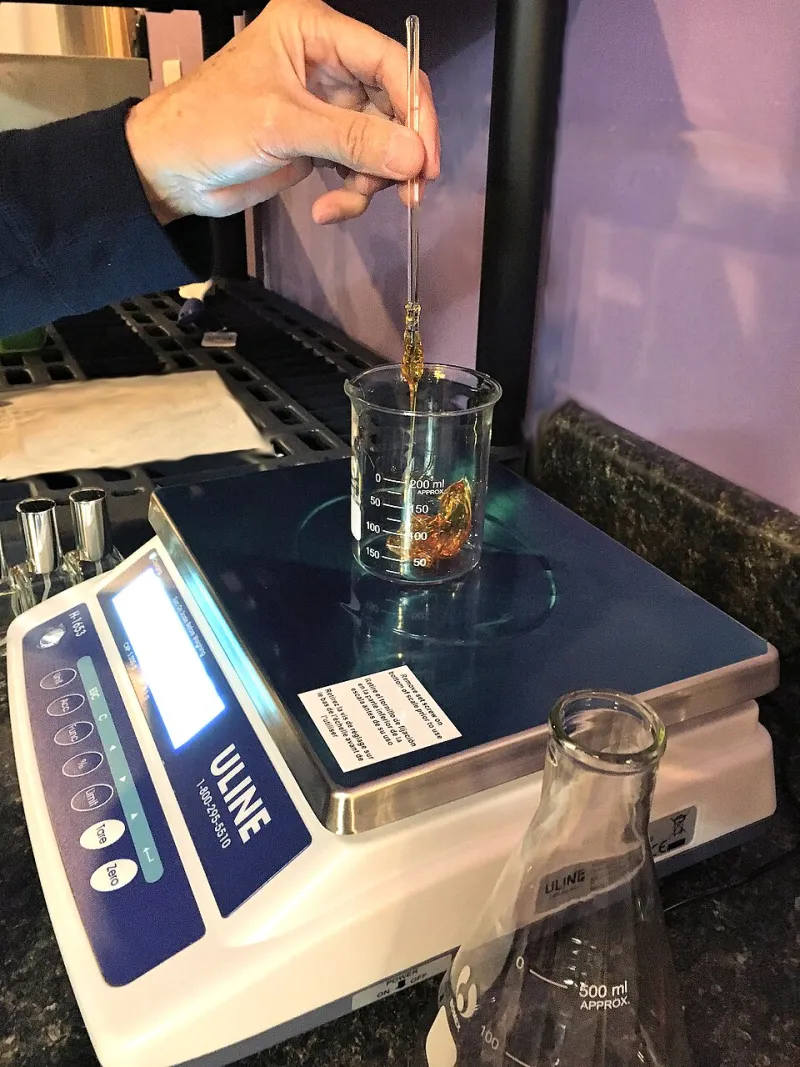
Photo: Draconis44, CC BY-SA 4.0, via Wikimedia Commons
For the better part of cannabis legalization's history in the United States, the number printed largest on any dispensary label has been THC. Consumers have chased it. Cultivators have optimized for it. Retailers have merchandised around it. And yet, among the growing ranks of truly discerning cannabis enthusiasts, that single-metric obsession is beginning to feel as unsophisticated as judging a Burgundy solely by its alcohol content.
We are, by most accounts, living through a cannabinoid renaissance — a period of rapid, exciting discovery in which the plant's full biochemical complexity is finally receiving the attention it deserves. Compounds once relegated to footnotes on lab reports are now commanding serious consideration, and the connoisseurs leading this charge are finding that the most rewarding cannabis experiences rarely belong to the highest-THC cultivar on the shelf.
The Limits of the Potency Paradigm
To understand why this shift is happening, it helps to understand what the potency paradigm got wrong. THC — delta-9-tetrahydrocannabinol — is, without question, the plant's most studied and most psychoactively prominent compound. Its appeal as a marketing metric is understandable: it is singular, quantifiable, and easy to communicate. But experienced consumers have long suspected that the correlation between THC percentage and quality of experience is, at best, imperfect.
Research increasingly supports that intuition. The phenomenon known as the entourage effect — the theory that cannabinoids and terpenes work synergistically rather than in isolation — suggests that a 30% THC flower stripped of its broader biochemical context may deliver a blunter, less nuanced experience than a 22% cultivar with a rich and varied supporting cast of minor compounds. The orchestra, in other words, often outperforms the soloist.
THCa: The Raw Compound Demanding Reconsideration
Perhaps no compound better illustrates the new connoisseurship than THCa — tetrahydrocannabinolic acid, the non-psychoactive precursor to THC that exists in abundance within the living plant and freshly harvested flower. When cannabis is heated through smoking, vaporization, or cooking, THCa undergoes decarboxylation and converts into THC. For most of cannabis's commercial history, this conversion was treated as the entire point.
But a growing cohort of enthusiasts and cultivators is beginning to appreciate THCa on its own terms. In its raw form, it does not produce intoxication, yet emerging research points to potential anti-inflammatory and neuroprotective properties that are distinct from those of THC. More relevant to the connoisseur's perspective, however, is what high THCa concentrations signal about a flower's freshness, cultivation quality, and handling integrity. A well-preserved, properly cured flower with robust THCa levels is a testament to craft at every stage of the supply chain.
Cultivators working at the artisan level — small-batch operations in states like Oregon, California, and Colorado — are increasingly featuring THCa content prominently on their packaging, inviting consumers to think about the compound not merely as a THC precursor but as a marker of quality in its own right.
CBG: The Cannabinoid Connoisseurs Are Calling the "Mother Compound"
If THCa is earning a second look, cannabigerol — CBG — is experiencing something closer to a full-scale revelation. Often referred to as the "mother of all cannabinoids" because cannabigerolic acid (CBGa) serves as the biosynthetic precursor from which THCa, CBDa, and CBCa are all derived, CBG is present in relatively small quantities in most mature cannabis plants. That scarcity alone has made it a subject of fascination.
Beyond its biochemical lineage, CBG is drawing interest for its distinct experiential profile. Users and researchers alike describe its effects as clear-headed and focused — a quality that stands in meaningful contrast to the heavy sedation sometimes associated with high-THC cultivars. For the connoisseur seeking a daytime companion or a strain suited to creative work, CBG-forward cultivars represent an entirely different register of experience.
Several craft cultivators have now developed CBG-dominant genetics — strains bred specifically to express elevated CBG before the plant's enzymes convert it into other compounds. These cultivars require harvest at a precise, early window, adding another layer of agricultural skill to the equation and, consequently, another dimension along which the discerning consumer can assess quality.
The Supporting Cast: CBC, THCV, and the Minor Compounds Worth Knowing
The cannabinoid spectrum extends well beyond the compounds that have attracted the most commercial attention. Cannabichromene (CBC), tetrahydrocannabivarin (THCV), and cannabinol (CBN) each contribute their own distinct character to a cultivar's overall profile, much as secondary flavor compounds in a fine wine or aged spirit add depth that the dominant notes alone cannot provide.
THCV, in particular, has become something of a connoisseur's curiosity. Found in higher concentrations in certain African landrace varieties and their descendants, THCV is associated with a rapid-onset, shorter-duration effect that some enthusiasts describe as energizing and appetite-suppressing — a profile strikingly different from the protracted experience of high-THC cultivars. For the sophisticated consumer who values precision and intentionality in their cannabis experience, THCV-rich cultivars represent a compelling addition to any curated collection.
CBC, meanwhile, is drawing interest for its role in the entourage effect — research suggests it may amplify the mood-elevating properties of other cannabinoids, functioning less as a lead character than as an exceptionally skilled supporting player. This is precisely the kind of nuance that separates a connoisseur's appreciation from casual consumption.
How to Evaluate Products Beyond the Potency Number
For consumers ready to move beyond the THC percentage as a primary selection criterion, a few practical approaches will serve them well.
Request the full panel lab report. A reputable producer will make comprehensive certificate of analysis (COA) data readily available, listing not just THC and CBD but the full range of detected cannabinoids. Familiarize yourself with the names and general profiles of the minor compounds discussed above. What you are looking for is not necessarily the highest individual number but a rich, varied profile that suggests genuine full-spectrum complexity.
Prioritize cultivators who discuss cannabinoid ratios intentionally. Brands and growers who speak fluently about their cannabinoid profiles — who can articulate why they harvest at a particular moment, or why they selected a specific genetic line — are operating at a level of craft that tends to produce more rewarding results. Seek them out at farmers markets in legal states, through boutique dispensaries with knowledgeable staff, and via the growing number of direct-to-consumer platforms that specialize in artisan cannabis.
Keep a consumption journal. The most reliable data point for any connoisseur is their own experience. Note the cannabinoid profile of each product alongside your observations about onset, duration, character, and overall quality. Over time, patterns will emerge — personal preferences for certain ratios, certain compound combinations — that no lab report alone can predict.
Approach minor cannabinoids with curiosity, not expectation. The science is still developing, and individual biochemistry plays an enormous role in how any given compound manifests in experience. The connoisseur's posture is one of informed openness rather than rigid prescription.
A New Vocabulary for a New Era
The cannabinoid renaissance is, at its core, a story about sophistication — about a maturing market and a maturing consumer base that is no longer satisfied with blunt metrics and marketing shorthand. The most engaged enthusiasts are developing a vocabulary for cannabis that rivals the lexicon of wine, whiskey, or specialty coffee: precise, personal, and perpetually expanding.
At Cannaisseur Brands, we believe this is precisely the direction the conversation should be moving. The plant is extraordinary in its complexity, and it rewards those who approach it with the same curiosity and discernment they would bring to any other refined sensory pursuit. The percentage on the label is a starting point, not a destination. The real experience — layered, nuanced, and deeply personal — begins where that number ends.