Hold or Burn: Crafting a Deliberate Strategy for Your Cannabis Cellar
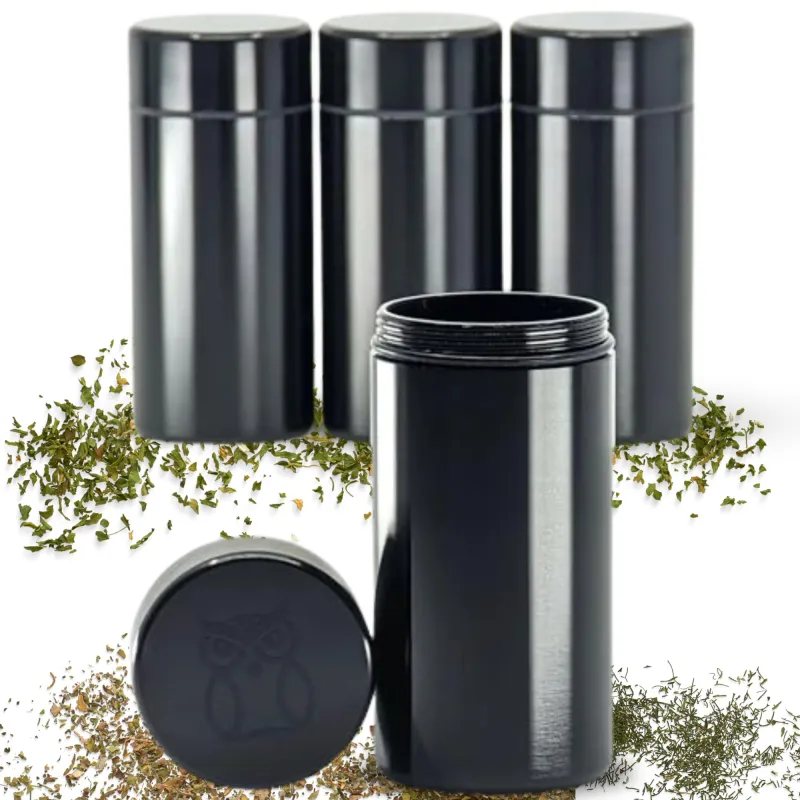
Photo: luxury cannabis collection jars shelf storage premium, via m.media-amazon.com
There is a particular kind of restraint that distinguishes the casual enthusiast from the true connoisseur. It manifests most visibly in the moment a coveted, limited-edition eighth arrives at your door—still cold from the refrigerated transport, the jar sealed with the quiet authority of something that knows its own worth. The question that follows is deceptively simple: do you open it tonight, or does it earn a place on the shelf?
This dilemma is not merely sentimental. It is strategic, economic, and deeply personal. And like the finest decisions in any collecting discipline—whether wine, whiskey, or rare vinyl—it rewards those who approach it with a framework rather than impulse.
Understanding Why Cannabis Ages at All
Before any cellar strategy can take shape, a connoisseur must reckon honestly with what time does to cannabis. Unlike wine, which typically improves under the right conditions for years or even decades, cannabis occupies more complex temporal territory. The terpene profile—that aromatic architecture responsible for the nuanced flavor and experiential character of a premium cultivar—is volatile by nature. Left unprotected, it degrades. Stored thoughtfully, however, certain chemical transitions can deepen a cultivar's complexity in ways that reward the patient collector.
Cannabinoids also evolve over time. THC converts gradually to CBN, a compound associated with sedative qualities, which can shift the experiential character of a flower toward something quieter and more contemplative. For collectors who favor introspective, body-centered experiences, a properly cellared specimen from a celebrated harvest may actually deliver something more aligned with their preferences than the fresh version ever could.
The operative phrase, of course, is properly cellared. Humidity control, darkness, stable temperature, and inert storage materials are non-negotiable prerequisites. Without them, aging is not transformation—it is simply decay.
Identifying Strains Worth the Wait
Not every premium release merits shelf space. Discernment here is everything. The connoisseur's task is to distinguish between cultivars that possess genuine aging potential and those that are best appreciated in their present, vibrant state.
As a general principle, cultivars with dense, resinous structure and complex terpene profiles built around heavier, more stable aromatic compounds—myrcene, caryophyllene, linalool—tend to hold and evolve more gracefully than those whose appeal rests primarily on bright, volatile top notes like limonene or terpinolene. A cultivar celebrated for its sharp, citrus-forward immediacy may lose its defining character within months of harvest, while one built around deeper, earthier foundations may genuinely deepen with time.
Genetics matter here as well. Landrace-adjacent cultivars and those with robust indica lineages have historically demonstrated more forgiving aging curves. Heavily hybridized modern cultivars, bred for visual appeal and potency metrics rather than structural integrity, often fade faster than their reputations suggest they should.
Finally, provenance counts. A micro-batch release from a single-source farm with documented cultivation practices and a verifiable harvest date gives you something to work with. An anonymous wholesale product does not.
The Economics of the Cannabis Cellar
It would be intellectually dishonest to discuss cannabis collecting without acknowledging the market dimension. Unlike wine or spirits, cannabis does not yet operate within a formalized secondary market infrastructure in the United States. Federal prohibition has precluded the development of auction houses, certified resellers, and the kind of provenance documentation that underpins collectible value in other categories.
And yet scarcity functions. Micro-batch cultivars from celebrated farms, single-run phenotype hunts, and collaboration drops between respected breeders and growers do appreciate in cultural currency even when legal resale remains complicated. The connoisseur who acquires two jars of a highly limited release—one to consume, one to preserve—is making a bet not on dollar returns but on experiential rarity. In five years, the opportunity to open a properly cellared specimen from a landmark harvest may be worth more, in terms of the experience it delivers and the conversation it generates, than any financial calculation.
That said, budget discipline matters. A cellar strategy that allocates acquisition funds indiscriminately will collapse under its own weight. Establish a clear percentage of your cannabis budget dedicated to long-hold acquisitions—many serious collectors find that twenty to thirty percent is a sustainable figure—and treat those purchases with the same rigor you would apply to any considered investment.
A Framework for Every Acquisition Decision
When a new release crosses your radar, the following questions can serve as a structured decision matrix.
First: Is this genuinely scarce? Not artificially scarce—manufactured hype is its own category of disappointment—but structurally limited by the realities of small-batch cultivation, single-season harvests, or unique phenotype expression. If the answer is yes, the hold case strengthens considerably.
Second: Does the cultivar profile suggest aging potential? Review the terpene data, assess the lineage, and consider the structural density of the flower. If the dominant character is built on volatile top notes, consume it fresh. If the foundation is deeper and more durable, it may reward patience.
Third: Do you have proper storage in place? This question is not rhetorical. A cellar strategy without adequate humidity control, light protection, and stable temperature is not a strategy—it is wishful thinking. If your infrastructure is not ready, consumption is actually the more responsible choice.
Fourth: Can you acquire enough to do both? The most elegant solution to the hold-or-consume dilemma is to remove it entirely. When access allows, acquire sufficient quantity to consume one portion at peak freshness and cellar the remainder for future evaluation. This dual-track approach yields both immediate pleasure and longitudinal insight.
Fifth: What is your personal horizon? A collector who moves frequently, whose lifestyle lacks stable storage conditions, or who simply derives more satisfaction from present experience than future anticipation should weight the framework accordingly. The cellar is a tool in service of enjoyment, not an obligation.
The Pleasure of the Long Game
There is a particular satisfaction unique to opening a jar that has rested for eighteen months under your deliberate care—one that no amount of immediate gratification can replicate. The flower inside is not the same as it was when you sealed it. Neither, likely, are you. That convergence, the cultivar's evolution meeting your own, is one of the more quietly profound experiences cannabis connoisseurship makes available.
Building a cellar strategy is ultimately an act of faith in your own taste and judgment. It asks you to trust that what you find compelling today will continue to reward your attention tomorrow, and that the patience you invest will return something that mere money cannot simply purchase on demand.
For the discerning collector, that proposition is not a dilemma at all. It is an invitation.