Scarcity, Smoke, and Mirrors: How to Tell Real Rarity from Manufactured Hype in Cannabis

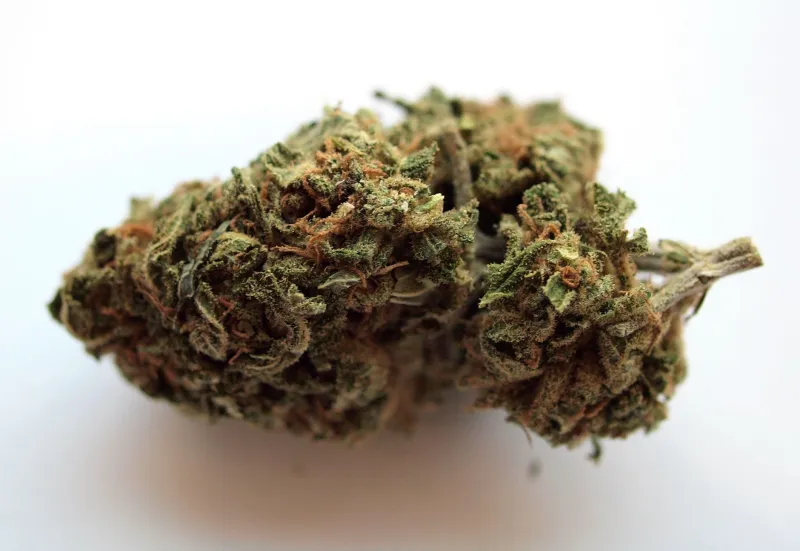
Photo by Photo by CRYSTALWEED cannabis on Unsplash on Unsplash
There is a particular thrill that accompanies a limited cannabis release — the notification from a boutique dispensary, the numbered jar, the cultivar name whispered among collectors as though it were a classified document. The cannabis connoisseur community has developed an almost liturgical reverence for scarcity, and the market has responded accordingly, engineering exclusivity with considerable sophistication. Yet a more searching examination of this phenomenon demands we ask a question that cuts against the grain of collector culture: does rarity actually make cannabis better, or does it merely make us believe it is?
The honest answer is both — and understanding the distinction is among the most valuable skills a serious enthusiast can cultivate.
The Genuine Case for Limited Production
To dismiss scarcity as pure theater would be intellectually dishonest. There are compelling agronomic and commercial reasons why truly exceptional cannabis is, by its nature, produced in limited quantities.
Small-batch cultivation — the kind practiced by dedicated independent growers across California's Emerald Triangle, the craft farms of Oregon's southern valleys, and the boutique operations emerging in Colorado and Michigan — imposes real constraints. A master cultivator tending a single room of hand-selected genetics, harvesting at peak trichome maturity, and conducting individualized curing runs simply cannot produce at industrial scale without compromising the very qualities that distinguish the work. Attention, in cultivation as in most crafts, is a finite resource.
"When we talk about a micro-batch release, we're talking about a physical ceiling," explains one Northern California small-farm operator who has supplied single-origin flower to premium dispensaries for over a decade. "I have eight plants of a particular cut. That's the run. There's no version of that product that exists in greater quantity without becoming a different product."
This is the legitimate core of cannabis scarcity: genetics that resist mass propagation, harvests governed by environmental conditions that cannot be replicated at will, and curing processes that require months rather than weeks. When a cultivator releases forty jars of a specific pheno-hunted expression, the limitation is not a marketing decision — it is a statement of biological and operational reality.
Furthermore, the economics of craft production are unforgiving. Without premium pricing, small-scale cultivators cannot sustain the labor-intensive practices — living soil amendments, integrated pest management, hand-trimming — that produce genuinely superior results. Scarcity pricing, in this context, is not exploitation; it is the financial architecture that makes craft cannabis possible at all.
When Exclusivity Becomes a Product in Itself
And yet. The cannabis industry, having observed the extraordinary success of streetwear drop culture, luxury spirits allocation systems, and the sneaker resale economy, has proven adept at manufacturing the sensation of scarcity independent of its underlying reality.
The mechanics are familiar to anyone who has navigated modern consumer culture. Artificial production caps on products that could be made in greater volume. Staggered release schedules designed to generate waitlists rather than meet demand. Proprietary strain names trademarked and licensed to multiple cultivators producing under vastly different conditions — with the brand equity, rather than the cultivation standard, carrying the premium.
A retail buyer at a multi-state dispensary group, speaking candidly, describes the dynamic plainly: "We see products all the time where the 'limited' designation is a merchandising decision made in a marketing meeting, not a reflection of what's actually in the grow room. The question I always ask is: limited compared to what? And who decided that number?"
The psychological machinery driving consumer response to these tactics is well-documented. Scarcity cues activate loss aversion — the fear of missing out functions as a more powerful motivator than the anticipation of gain. When a cannabis brand releases a product in quantities engineered to sell out within hours, it is not necessarily celebrating exceptional quality; it may simply be applying behavioral economics to move inventory at maximum margin.
The result is a market in which price and exclusivity have partially decoupled from the quality indicators that should theoretically justify them. A $75 eighth is not automatically superior to a $45 eighth. A numbered jar does not confer terpene complexity. A two-hour sell-out window is a testament to marketing execution, not necessarily to cultivation excellence.
A Framework for the Discerning Buyer
Navigating this landscape requires the kind of methodical skepticism that defines genuine connoisseurship. The following principles offer a working framework.
Trace the limitation to its source. When evaluating a limited release, ask whether the scarcity originates at the cultivation level or the marketing level. Legitimate small-batch producers can typically articulate the specific constraints — plant count, harvest window, phenotype selection — that govern their output. Vague references to "exclusive" or "reserve" designations without corresponding cultivation specifics warrant scrutiny.
Evaluate independent of price. Approach every product on its sensory merits before consulting the price tag. Terpene expression, structural integrity, cure quality, and combustion characteristics are observable facts. If a product at a premium price point does not deliver correspondingly elevated sensory experience, the premium is not justified — regardless of how limited the release was declared to be.
Develop relationships with cultivators directly. The most reliable intelligence in the cannabis market flows from direct producer relationships. Brands and dispensaries that facilitate genuine transparency about growing practices, testing data, and production volumes earn trust that purely transactional retailers cannot replicate. When a cultivator can tell you exactly how many plants produced a given harvest and why that number couldn't be larger, you are dealing with authentic scarcity.
Consult the certificate of analysis without reverence. Lab data does not lie in the way that marketing copy sometimes does. Total terpene percentages, cannabinoid profiles, and the presence or absence of residual solvents or pesticides are objective measures that no amount of brand positioning can alter. A modestly priced product with an exceptional terpene profile from a rigorous testing laboratory deserves more respect than a premium-priced release with mediocre analytical results.
Recognize that patience is a connoisseur's advantage. The urgency manufactured by limited drops is designed to override deliberate decision-making. A collector who waits, researches, and acquires selectively — rather than reflexively — will build a more genuinely distinguished collection than one who chases every announced release.
The Honest Verdict
The connoisseur's paradox resolves, ultimately, into a more nuanced position than either cynicism or credulity. Scarcity is sometimes the honest expression of extraordinary care applied at small scale, and when it is, the premium is earned and the chase is worthwhile. Scarcity is also, with increasing frequency, a sophisticated commercial strategy that leverages collector psychology to extract value independent of product merit.
The discerning enthusiast's task is not to reject exclusivity wholesale — that would mean missing some of the finest cannabis produced anywhere in the country. It is, rather, to develop the critical vocabulary to distinguish between the two. Real rarity leaves evidence: in the cultivation story, in the sensory experience, in the data. Manufactured rarity leaves a different kind of evidence — in the marketing language, in the absence of specific detail, in the gap between the price paid and the pleasure received.
Knowing the difference is, in the end, what separates a collector from a consumer.